H³ 2016-2017

H³ 2016-2017

2016
2017
Find out more

Program : H³ - Heart, head, hand

Disciplines : Artisanat, Biodiversité, Solidarité

© Ibaba Rwanda
© SEL
© Association Partage
© Association Jeunesse Tizgui
Fondation Foujita © Laurence Godart

Plusieurs projets soutenus concernent la transmission de savoir-faire et la formation professionnelle. 

Au Brésil, dans la favela de Vila Prudente à São Paulo, l’association Arca do Saber a ouvert un centre de formation. Des jeunes apprennent divers métiers (dont celui de boulanger) et suivent une formation complémentaire en anglais et informatique.

En France, la Maison familiale rurale Le Village, située en Isère, offre différentes possibilités d’orientation à des adolescents en situation de décrochage scolaire. 
À Chambéry, le projet du Mini-Racing permet à d’autres de fabriquer collectivement des répliques de voitures de Formule 1, sous la houlette d’experts adultes.
Dans le Limousin, les amis du site du château de Lavauguyon se mobilisent. Sous la conduite d’un compagnon tailleur de pierres et d’un technicien du génie civil, de jeunes bénévoles ont participé à un chantier de restauration du site dans le respect des techniques traditionnelles. 
Dans le Rhône, l’association française des éleveurs de chèvres cachemire a fait l’acquisition d’une éjarreuse. Les objectifs ? Préserver leur savoir-faire textile et redynamiser la production locale de cachemire. 

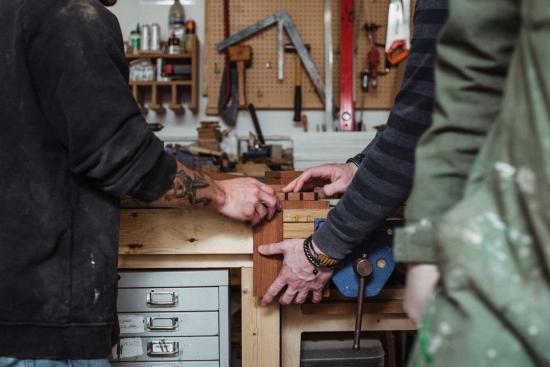
À Londres, à la Goldfinger Factory, un apprenti a été initié pendant deux ans à la menuiserie, l’ébénisterie, la ferronnerie et la peinture. Cette formation professionnelle lui permet aujourd’hui d’embrasser une carrière artisanale. 

Au Rwanda, l’association Ibaba Développement relance l’activité de broderie qui florissait dans un village avant le génocide de 1994. Le projet vise à construire un atelier-école et à former de nouvelles brodeuses, qui elles-mêmes seront amenées à transmettre leurs pratiques. 

En Inde, à Kolkata, Entrepreneurs du Monde a mis en place soixante-quinze centres de formation pour donner la possibilité à des femmes en grande précarité de s’initier à la couture et à la broderie. 

À l’occasion de cette deuxième édition de H³, quatre projets ont conduit des enfants et des adolescents à s’ouvrir au monde grâce à la pratique artistique. 

En Allemagne, à la Münchner Kammerspiele, de jeunes réfugiés sans famille et des jeunes aux situations sociales fragiles ont constitué une troupe. Encadrés par des professionnels, ils ont présenté un spectacle inédit au public du théâtre. 

En Australie, la Sydney Dance Company a créé son premier spectacle jeune public. La pièce a été jouée dans les établissements scolaires de l’ouest de Sydney et les élèves ont participé à des ateliers de pratique de danse.  

En France, la Fondation Maître Léonard Foujita sensibilise à la création contemporaine des lycéens engagés dans des filières professionnelles. 

À New York, le Lower Eastside Girls Club initie gratuitement aux savoir-faire artisanaux des jeunes filles vivant sous le seuil de pauvreté, majoritairement issues des communautés latinos et afro-américaines. 

Dans des contextes très différents, quatre projets incarnent des gestes de solidarité destinés à épauler les personnes les plus fragiles et à atténuer les dommages de l’isolement. 

Au Maroc, l’association Jeunesse Tizgui pour le développement et la solidarité accompagne des villageois dans leur projet de boulangerie communautaire. Sa création devrait permettre à des femmes de gagner en autonomie, grâce à un emploi.

À Athènes, la Fondation soutient le fonctionnement quotidien d’une maison de répit située au cœur du Cerebral Palsy Greece, un centre d’accueil pour enfants et adultes souffrant d’infirmité motrice cérébrale.
 
À Hong-Kong, au Lunch Club créé par la French Chamber Foundation, des personnes en situation de précarité ont accès pour une somme modique à des repas équilibrés et à des conseils professionnels.

Au Japon, Sokoage s’adresse à la jeunesse d’une région très affectée par le tsunami de 2011. L’association propose des ateliers, visites et rencontres. 

Partout, des hommes et des femmes s’engagent pour la préservation de la biodiversité. 

Au Japon, l’association Coral Okinawa organise des campagnes de plantation de corail sur les récifs de l’île d’Okinawa, ainsi que des activités ouvertes à tous pour favoriser la connaissance de cet écosystème. 

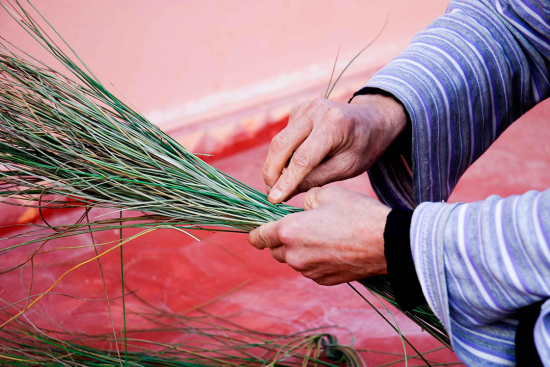
Dans la baie de Manille, les bénévoles de Mercy Relief encadrent la population dans la replantation d’une mangrove. Une reforestation essentielle dans cette zone fortement exposée aux cyclones. La présence de jacinthes d’eau permet également de revitaliser un savoir-faire artisanal local. 

Au Burkina Faso, le Service d’Entraide et de Liaison accompagne l’aménagement d’un périmètre bocager afin de remédier à la dégradation de l’environnement rural. Les populations sont formées à des techniques agricoles durables. 

À Londres, près du Lycée international Winston Churchill, se trouve un espace vert planté d’arbres in memoriam. Jusqu’alors peu entretenu, ce jardin fait l’objet d’un projet écologique et pédagogique destiné aux élèves de l’établissement.

En France, à l’initiative de l’association J’Art d’Ain partagé, des écoliers ont accès à plusieurs jardins partagés aménagés en privilégiant des techniques agro-écologiques. 

À Madagascar, l’association Partage accompagne des écoliers dans de multiples actions d’information sur l’environnement. Ils participent à des classes vertes, ainsi qu’à des activités de plantation d’essences locales et de sensibilisation à la gestion des déchets. 

Au Liban, l’association arcenciel aide à renforcer les savoir-faire en matière de conservation forestière. Dans la réserve naturelle du Chouf, de jeunes adultes sont notamment formés à l’aménagement de sentiers et à la prévention des incendies, avant de devenir formateurs à leur tour. 

Through H³, Hermès staff are invited to bring public-interest initiatives in which they are personally involved to the attention of the Foundation. Projects from all over the world are welcomed, and can involve training and education, the promotion of artisan trades, or the preservation of biodiversity. In 2016 and 2017, the programme’s second edition supported and accompanied twenty-four projects over a two-year period.

Several of the projects supported by the Foundation promote the transmission of skills and professional training. 

In Brazil, in the Vila Prudente favela in São Paulo, the Arca do Saber association has opened a training centre where young people can learn trades, such as baking, whilst benefiting from complementary courses in English and computing. 

In France, the maison familiale rurale Le Village in Isère offers a range of training options to teenagers struggling in the school system.
 
In Chambéry, the Mini-Racing project allows young people to construct replica Formula 1 cars under the supervision of experts. 

In the Limousin region, the Friends of the Site du Château de Lavauguyon have come together to protect the historical site, with young volunteers discovering traditional restoration techniques under the supervision of a stonemason and a civil engineer. 

In the Rhône, the French Association of Cashmere Goat Breeders has purchased a loom, with the aim of preserving textile skills and reinvigorating the local cashmere industry. 

The Goldfinger Factory in London provided a two-year apprenticeship in carpentry, woodwork, metalwork and painting that allowed the young apprentice to embark upon an artisan career. 

In Rwanda, the Ibaba Development association strives to restore the embroidery industry that flourished in the village prior to the 1994 genocide. The project aims to construct a joint atelier and workshop, and to train new embroiderers who will pass on their skills to others in turn. 

In Kolkata, India, Entrepreneurs du Monde has established some seventy-five training centres to help economically vulnerable women learn the basics of sewing and embroidery. 

This second edition of H³ supported four projects that broaden the horizons of children and teenagers through artistic practice. 

In Germany, a group of unaccompanied refugees and vulnerable young people formed a theatre troupe at the Münchner Kammerspiele. Under the guidance of professionals, they presented an original play to the theatre’s audiences. 

In Australia, the Sydney Dance Company created its first piece for young audiences, which it presented in schools in the west of the city alongside practical dance workshops.

In France, the Fondation Maître Léonard Foujita seeks to introduce young people in professional training to the diversity of creativity in the contemporary arts.

In New York, the Lower Eastside Girls Club offers free courses in craft skills to girls living below the poverty line, the majority of whom come from Latino and African-American communities.

The Foundation supported four very different projects that act in solidarity with vulnerable people to reduce their isolation.

In Morocco, the Jeunesse Tizgui association for development and solidarity accompanies villagers in their community-run bakery project, which increases women’s independence by offering them a chance to earn a living. 

In Athens, the Foundation supported the daily running of a rest home within the Greek Cerebral Palsy Centre for children and adults living with the cerebral motor condition. 

In Hong Kong, the Lunch Club created by the French Chamber Foundation offers inexpensive, balanced meals and access to professional advice for economically vulnerable people. 

In Japan, the Sokoage association offers activities, outings and talks to young people in the region hardest hit by the 2011 tsunami. 

Throughout the world, people are committing to the preservation of biodiversity. 

In Japan, the Coral Okinawa association organises coral-planting programmes on the reefs surrounding the island of Okinawa alongside a broad range of activities that aim to broaden awareness of this ecosystem.

In the bay of Manila, Mercy Relief’s volunteers help the local population to replant a mangrove swamp. Such reforestation is essential in this cyclone-prone area. The presence of water hyacinths has also contributed to a revival in local craft skills.

In Burkina Faso, the Service d’Entraide et de Liaison is organising the planting of a wooded perimeter to counteract the degradation of the rural environment, whilst training local people in sustainable farming techniques. 

In London, a spot of greenery near the Lycée International Winston Churchill is home to a garden of trees planted in memoriam. Uncared-for until recently, the garden is now at the heart of an ecological and educational project for the pupils of the Lycée.

In France, the J’art d’Ain Partagé association offers schoolchildren access to a number of shared gardens planted using sustainable approaches.

In Madagascar, the Partage association supports schoolchildren participating in a range of environmental awareness programmes. The children participate in ‘green classes’ as well as planting fuel crops and learning about waste management. 

In Lebanon, the Arcenciel association promotes forestry conservation skills. In the Chouf nature reserve, young adults in particular are trained in path construction and fire prevention, and go on to become instructors in turn.
 

Disciplines
Craftsmanship
Biodiversity
Solidarity
An internal call for projects invites Hermès staff to present solidarity-focused initiatives to Foundation.
Selected projects involve training and education, the promotion of artisan trades, and the preservation of biodiversity.
The programme’s second edition supported and accompanied twenty-four projects over a two-year period.

Informations

  • Selected projects
    • Sydney Dance Company, Sydney, Australia
    • Mini Racing Chambérien, Chambéry, France
    • The Lower East Side Girls Club, New York, USA
    • Arca Do Saber, São Paulo, Brazil
    • Maison Familiale et Rurale ‘Le Village’, Saint-André-le-Gaz, France
    • Les Amis du Site du Château de Lavauguyon, Maisonnais-sur-Tardoire, France
    • Fondation Maître Léonard Foujita, Paris, France
    • Cerebral Palsy Greece, Athens, Greece
    • Münchner Kammerspiele, Munich, Germany
    • Entrepreneurs du Monde, Kolkata, India
    • Ibaba Développement, Rutongo, Rwanda
    • Association Nationale des Éleveurs de Chèvres Cachemire, Rhône, France
    • Association Jeunesse Tizgui pour le développement et la solidarité, Villiers-le-Bel, France
    • Goldfinger Factory, London, UK
    • The French Chamber Foundation, Hong Kong
    • Musée de l’Eventail, Paris, France
    • J’Art d’Ain partagé, Belley, France
    • Lycée Winston Churchill, London, UK
    • Association Partage, Madagascar
    • Arcenciel, Beirut, Lebanon
    • Service d’Entraide et de Liaison, Konkoos-Raogo, Burkina Faso
    • Mercy Relief, Manilla, Philippines
    • Coral Reefs in Okinawa, Okinawa, Japan
    • Sokoage, Kesennuma, Japan

See also